REVIEWS and TESTIMONIALS
Residential Reviews
Hi Keene...It is now winter and I would like to thank you for the warm floors, and no more draft in the area your crew installed airkrete® GREENsulation™ insulation. They were courteous, professional, and timely and they cleaned up well. In general, I am extremely pleased with the whole experience.
Thank You. Patty VanHorn
Thank You. Patty VanHorn
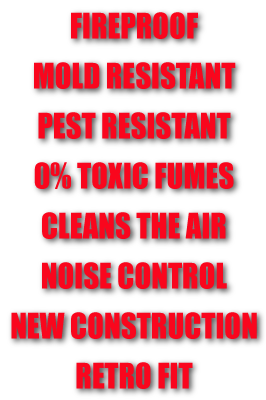
... I was home and asleep when the fire started. It burned 1/3 of our roof off. ... During the blaze, the 3X12s burned nearly completely through above the airkrete® GREENsulation™ insulation. I definitely believe that the fire break that the airkrete® GREENsulation™ provides is what prevented the collapse of the roof into the living space and allowed me the time to put out the blaze.
Billy Day
It was in the fall of 2009 an airkrete® GREENsulation™ Licensed Manufacturer called the office all excited... " While I was putting airkrete® GREENsulation™ in my customer's wall the termites are literally crawling out of the walls carrying their larva right before our eyes... They are flopping upside down... It's incredible..."
Termites Goodnight | Read More
I just wanted to let you know how happy my husband and I are with our decision to insulate with airkrete® GREENsulation™ and Brand Insulation. This has probably been the most valuable home improvement project we’ve done. Our heating bills were cut in half the following winter.
D. Hash, East York | Read More
Very satisfied with Brand Insulation and the airkrete® GREENsulation™ insulation installed in my house. House felt cooler in the summer and warmer in the winter with noticeably fewer drafts. Installers were friendly and worked very hard to complete the installation on-time and did a thorough job cleaning up after completion.
T. Belyk, Toronto
Five years ago we have bought our first home, an older house (about 50 years old). We had no knowledge at the time that the double brick bungalow that we had gotten had no insulation in the walls but two cavities air filled. We were soon to find that out...
BARSAN, Victoria Village, North York | Read More
I had my 55 year old double brick house insulated. Yes, finally... I had been researching for a product for the last 6 years that could insulate between the two layers of brick. When I saw the site for airkrete® GREENsulation™ cement based insulation I knew this would work for my house.
D. Nahal, Brampton, Ontario | Read More
This is to express my appreciation for the excellent job your crew did insulating my 100 year old house with airkrete® GREENsulation™ last fall. I am extremely pleased with the drastic cut in my heating bill over the past Winter! Also, it is noticeably quieter inside. Your crew was extra careful in removing and replacing the old, brittle shingles, so that almost no damage was done. This was to me, an incredible feat and only accomplished because of the painstaking manner with which you worked.
Thanks again for a job well done! Judy Farrar
Thanks again for a job well done! Judy Farrar
We built our living quarters into a two hundred year-old barn, occupying 1/3 of the structure with air krete forming a barrier between the heated quarters and the remainder of the old barn...
David Lyle | Read More
We could not believe how easy it was to heat a 2-Story 10,000 square foot living space with a 100,000 BTU temporary heater after you insulated the structure with airkrete® GREENsulation™. And, we only had duct work in the basement at the time.
James O. Rudy
Commercial Reviews
City Housing Authority of NYC. Area airkrete® GREENsulation™ installer in NYC received a call to stop in for an inspection at the apartment building....When he arrived the authorities were all smiling at him. To everyone's amazement it seems that shortly after the airkrete® GREENsulation™ was installed a fire broke out due to faulty wiring. The fire at Betances House Complex on East 146th St. NY City was contained because of airkrete® GREENsulation™'s fireproofing qualities blocked the fire.
Fireproof |
During an ice storm related 5 day power outage, the airkrete® GREENsulation™ insulated gymnasium was utilized as a temporary emergency shelter. Even though there was no heat in the building...
Matt Bauer Owner of Gutters Insulation & More, Inc. | Read More
...airkrete® GREENsulation™ masonary wall insulation helped reduce natural gas usage by 32%.
Tinora High/Middle School - Romeo MI | Read More
airkrete® GREENsulation™ far surpasses the requirements of the NYC Department of Buildings with respect to combustion product toxicity testing results. Comparison between airkrete® GREENsulation™ and wood revealed that airkrete® GREENsulation™ is not more toxic than wood. In reviewing the many thousands of products which we have tested; airkrete® GREENsulation™ remains one of the outstanding examples.
Rosalind C. Anderson, Ph. D.
airkrete® GREENsulation™ application at the Saratoga Night Club ... located in the basement of 6 Caroline Street and surrounded by many businesses.... With this being said, you must consider all surrounding businesses and housing tenants.
Mark S. Reed
Owner/ President of The Climate Chief LLC, a BPI certified company New Time Remodelers and General Contractor, LLC
Sound Abatement | Read More
We selected airkrete® GREENsulation™ for use in the Shawnee County Adult Detention Center for these reasons:
• Reinforced curved varying cavity thicknesses most easily filled by foam-in-place
• Life Safety - Non Combustible
• Inhibits transmigration of moisture...
Gregory D. Sims, AIA | Read More
airkrete® GREENsulation™ was very instrumental in the reduction of our fuel costs - from $100,000 a year to $51,700 a year...
Gail M. Jones
Jones Executive Director
Associates for Community Development
Management Agent for Kings Daughters Court
...airkrete® GREENsulation™ masonary wall insulation - swimming pool walls (only) delivered a 20.7% savings in the districts total natural gas use.
Ayersville Local Schools | Read More